

Why high-achievers set goals they never finish
The three problems with 'important' goals

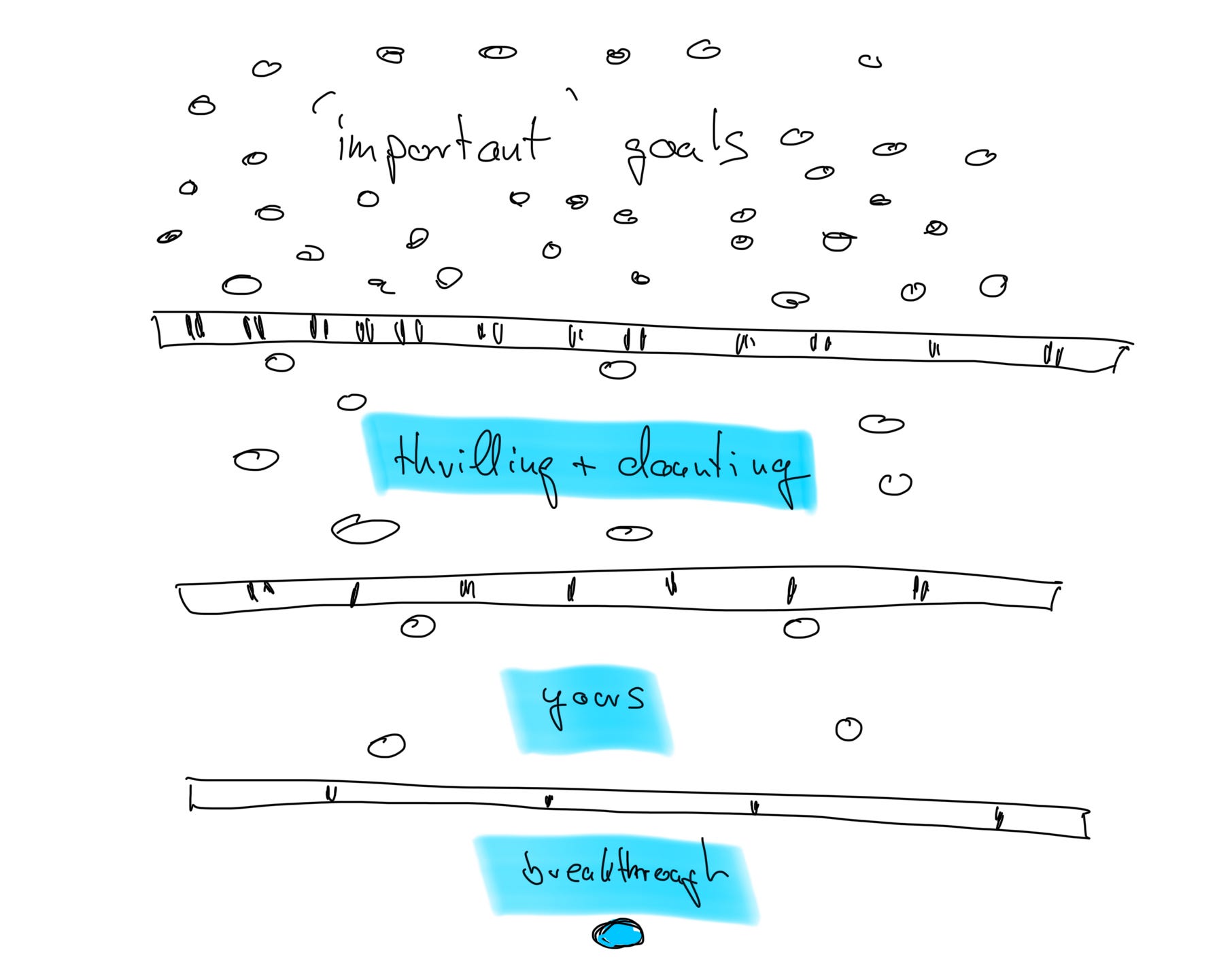
A client told me recently: “I know exactly what I should be working on. I’ve known for months. I just... don’t.”
He’s not lazy. He runs a team of 15. He’s disciplined about exercise, reading, showing up for his family. And yet this one goal, the one he calls ‘important’, sits untouched on his list, week after week.
My client (and I) used to look at this as a commitment problem, or a prioritization problem. Now I think the problem often is upstream. Most goals are doomed the moment you choose them.
Here are three reasons why - and they all have to do with setting ‘important’ goals.
Your goals feel important, but not exciting
Ayelet Fishbach’s research in Get It Done points to an uncomfortable finding:
‘Important’ is a strong predictor of intention. It’s a weak predictor of behaviour. We reliably intend to do what we consider important. But we don’t reliably do it.
This makes sense if you think about it. ‘Important’ points to something beyond yourself - your organization, your family, your future self. That’s fine, but it’s only one filter, and it’s the filter most likely to produce goals that feel like obligations.
What’s missing?
Michael Bungay Stanier, in How to Begin, offers two additional criteria: Is it thrilling? Is it daunting?
Thrilling means a deep, visceral yes. The kind that makes you lean in, not the kind you talk yourself into. If your goal doesn’t produce some version of “I actually want this” (not “I should want this”) you’re building on sand.
Daunting means it makes you sweat. It’s not impossible, but it’s uncomfortable. A goal that sits safely inside your current capabilities is maintenance, not a worthy goal.
Here’s the test: take an ‘important’ goal you’ve not been executing.
Now ask yourself:
Does this thrill me or obligate me?
Does this scare me a little or bore me?
If the answers are “obligate” or “bore,” you’ve found your problem.
Everything is important, but nothing is a breakthrough
I hear this often from driven, successful clients, especially leaders: “But Daniel, everything is important!”
They’re not wrong. Strategy is important. Culture is important. Hiring, retention, innovation, execution, all important. When everything passes as important, the word has become useless as a filter.
The solution isn’t to rank importance more carefully. It’s to ask a different question entirely.
The Four Disciplines of Execution framework offers one: What’s the breakthrough? What would change everything if we achieved it?
Consider airlines. Safety is important obviously. But for most carriers, safety isn’t a breakthrough goal. It’s business as usual, already embedded in operations. The real breakthrough is elsewhere.
Compare that to my client with the untouched goal. When I asked him what was important, he listed seven things. When I asked what would be a breakthrough, he went quiet. He had to step back and think. In the next session, he named one thing he’d been avoiding for months because it was harder, riskier, and more consequential than the rest. And he had already started executing on it.
That’s the goal that matters. And ‘important’ would never have filtered it out.
The questions to ask instead:
If I achieved this, what else would become easier or unnecessary?
If everything else stayed the same, which single result would make the biggest difference?
What result would I be proud to share publicly because it shows real progress, not activity?
Important... for whom?
There’s a third problem with ‘important’ goals, and it’s the one we’re least likely to notice.
Many of them aren’t yours.
The French philosopher René Girard called this mimetic desire. We don’t want things directly. We want what others want, or what we think they want. Our goals get inherited from peers, bosses, culture, LinkedIn feeds. They feel important because they’re admired.
But admiration isn’t the same as alignment.
So: that goal you’ve been calling important, ask: important for what? Important for whom?
Maybe it’s important for your career narrative. Maybe it’s important for how you appear to your board, your team, your parents. Maybe it’s important because everyone else in your position seems to be wanting it.
None of that makes it wrong. But it does make it worth examining.
The question to help you with that: If no one would ever know whether I achieved this, would I still want it?
If your answer is no, you’ve borrowed someone else’s ambition.
When you set a goal, ask:
Thrilling & daunting or obligating? Does this goal pull you forward or push you from behind?
Breakthrough or maintenance? If you achieved it, would everything else shift?
Yours or borrowed? Would you want this if no one was watching?
Most goals fail the moment we choose them. These questions are how you choose differently.
Which of your current goals survives all three?
Like this? Subscribe to get a 5-minute assessment for your personal focus profile + weekly tools